

How the Twitch Recommendation System Works
A stream can have a great title, clean overlays, and a strong category choice yet still disappear after a few minutes. The Twitch recommendation system is built to solve one problem for viewers: finding another stream they are likely to watch. For creators, that means visible growth is not just about getting clicks. It is about giving Twitch evidence that people stay, participate, and return.
Twitch does not publish a fixed formula or a guaranteed path to recommendation traffic. That is why chasing one metric in isolation is a losing move. Real momentum comes from stacking signals that make your channel look worth watching now and worth showing again later.
What the Twitch Recommendation System Is Trying to Do
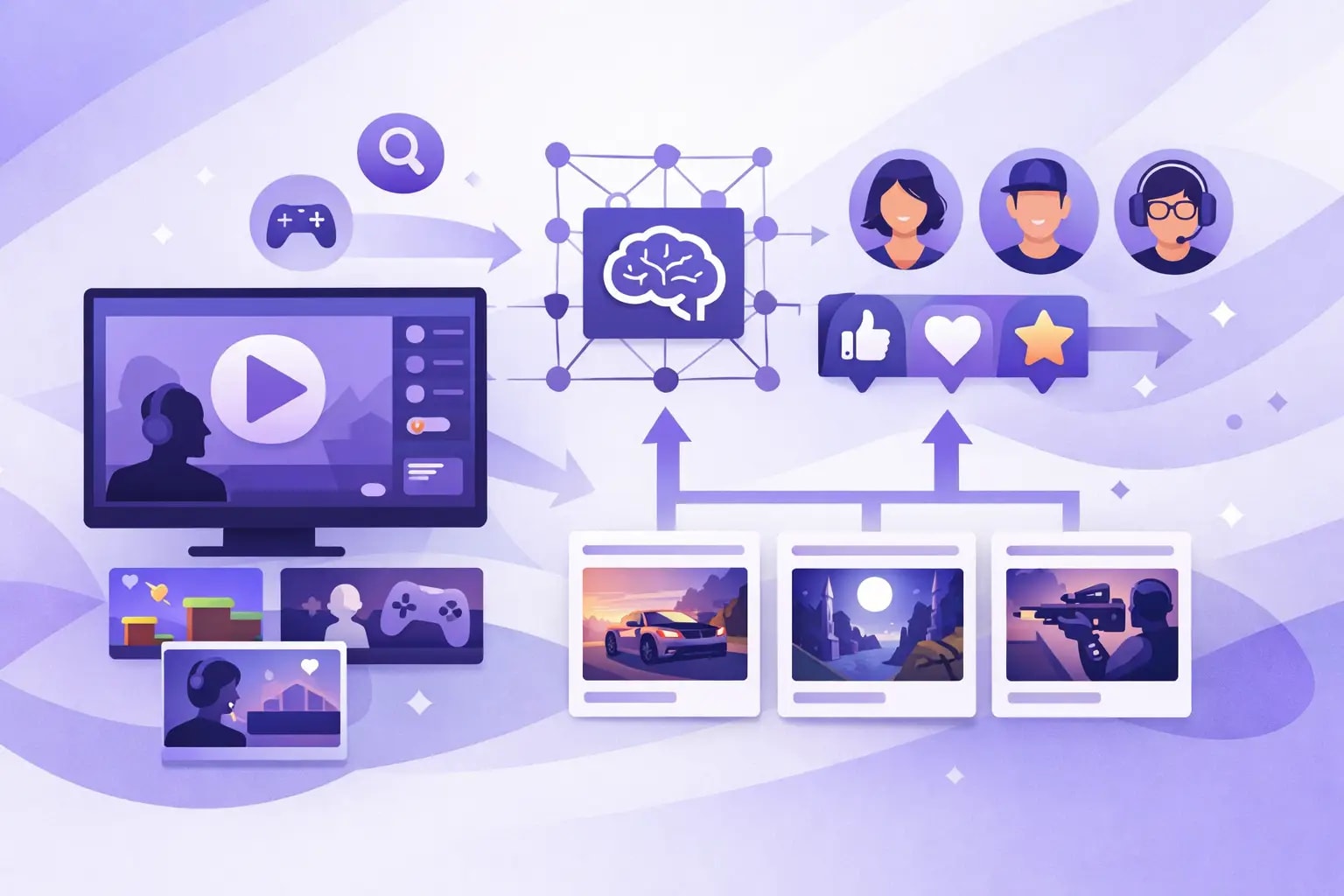
Recommendations appear in different places across Twitch, including the home page, suggested channels, category pages, and after a viewer leaves another stream. The exact placements change, but the goal stays consistent: match viewers with streams that fit their interests and keep them on the platform.
That means Twitch can evaluate two sides of the equation. First, it looks at the viewer: which games, categories, creators, languages, and stream formats do they usually watch? Second, it looks at your channel: who clicks in, how long they stay, whether they engage, and whether your stream appears relevant to similar viewers.
A small creator will not automatically lose to a larger one. A 40-viewer stream with strong retention and an active chat can be a better recommendation candidate for a certain audience than a 2,000-viewer stream with weak relevance. Scale matters, but fit and session quality matter too.
The Signals That Create Recommendation Momentum
Viewer retention is the real test
A click is only the beginning. If viewers open your stream and leave almost immediately, that suggests the title, thumbnail, category, or opening minutes did not match what they expected. If they stay through a match, a story beat, a reaction segment, or a useful conversation, Twitch gets a much stronger quality signal.
This is why the first 10 minutes of a broadcast deserve planning. Avoid long silent setups, confusing starting screens, or a delayed introduction with no context. Start with a clear activity and give new viewers an easy reason to understand what is happening. In gaming, that might be a ranked goal or challenge. In Just Chatting, it could be a specific topic with a clear point of view.
Retention is not only about average watch time. The shape of your stream matters. A channel that holds viewers steady through its first hour is likely in a better position than one that spikes from an announcement and immediately drops.
Engagement tells Twitch the room is alive
Chat activity, follows, clips, subscriptions, and other interactions can indicate that viewers are doing more than passively sampling the stream. A busy chat by itself is not magic, but genuine conversation helps create a better viewer experience. New visitors are more likely to stay when they can see a real community in motion.
The strongest chat activity is connected to the broadcast. Ask viewers to make a choice, react to a play, share an opinion, or predict what happens next. Generic messages such as “how is everyone doing?” have their place, but they rarely create the energy of a specific question with an immediate answer.
Clips can also extend a stream beyond the live session. A funny fail, smart play, strong take, or memorable community moment gives viewers something to share and gives your channel another discovery surface. Do not force every moment into clip bait. Build repeatable moments worth clipping instead.
Relevance starts before the stream goes live
Twitch needs context to understand where your content belongs. Your category, stream title, tags, language, and schedule all help set expectations. If you regularly switch between unrelated games without a clear audience overlap, it can be harder for Twitch and viewers to identify your channel’s best fit.
This does not mean you must stream one game forever. It means variety works best when it has a recognizable promise. A creator known for difficult action games, late-night co-op chaos, competitive shooters, or high-energy commentary gives people a reason to follow across category changes.
Use titles that describe a real reason to watch. “LIVE NOW” wastes valuable space. “Road to Diamond - Duo Queue With Viewer Challenges” tells the right person what they will get and creates a better match between click intent and your actual content.
Why Visible Momentum Changes Viewer Behavior
Recommendation systems are built from behavior, and behavior is influenced by perception. Viewers make fast decisions when browsing a crowded category. A stream with active conversation and visible audience momentum can feel more established than a stream that looks empty, even when the content quality is similar.
That social proof can improve the first impression, but it cannot carry a weak show for long. If people arrive and find no direction, no interaction, or no personality, they leave. The smart play is to treat audience scale as an amplifier for a stream experience that already gives people reasons to stay.
Creators should also avoid tactics that create empty-looking engagement or mislead viewers. Twitch can change enforcement and detection methods, while low-quality traffic does nothing to create a durable community. Focus on real watch time, real interactions, and content that earns the next click.
A Practical Plan to Earn Better Recommendations
Start by choosing one primary audience for the next four weeks. You can still experiment, but give the channel a clear center. If you stream a competitive game, decide whether you are serving players who want education, entertainment, high-rank gameplay, or community matches. Trying to be everything at once makes your positioning harder to understand.
Then design each broadcast in blocks. Your opening should give immediate context. Your middle should contain the strongest repeatable segment, such as ranked games, guest conversations, challenges, or viewer participation. Your final block should create a reason to return, whether that is a raid, a next-stream goal, or an unfinished challenge.
Track the moments that move your numbers. Look at when viewers join, when they leave, which topics trigger chat, and what produces clips or follows. A sudden drop after queue time may mean you need more commentary between games. A spike during viewer matches may tell you that community participation is your best growth engine.
Promotion should feed the live show rather than distract from it. Short-form content, Discord announcements, collaborations, and consistent scheduling can send initial viewers to Twitch. The live stream must then convert that attention into retention. Otherwise, you are paying for a revolving door.
Common Mistakes That Limit Discovery
The first mistake is treating the category page as a lottery. Browse placement is competitive, but you can improve your odds by building a clear format, attracting the right audience, and maintaining a schedule viewers recognize.
The second is copying a large streamer’s format without their context. A major creator can run a slow opening because their audience arrives for them. Smaller channels need to establish value faster. Give a new viewer something to react to within seconds, not after a 20-minute warmup.
The third is measuring success only by peak viewers. Peak concurrency can be exciting, but average viewers, returning viewers, chat participation, and follow conversion often tell you more about whether your channel is becoming recommendable. One big spike is a moment. Consistent session quality is a pattern.
Build Signals You Can Sustain
The Twitch recommendation system rewards no single trick because viewers do not behave according to a single trick. It responds to patterns: the right people finding your stream, choosing to stay, joining the conversation, and coming back when you go live again.
Make your next stream easy to understand, active from the first minute, and built around a moment viewers want to share. That is the kind of momentum that keeps working after the broadcast ends.