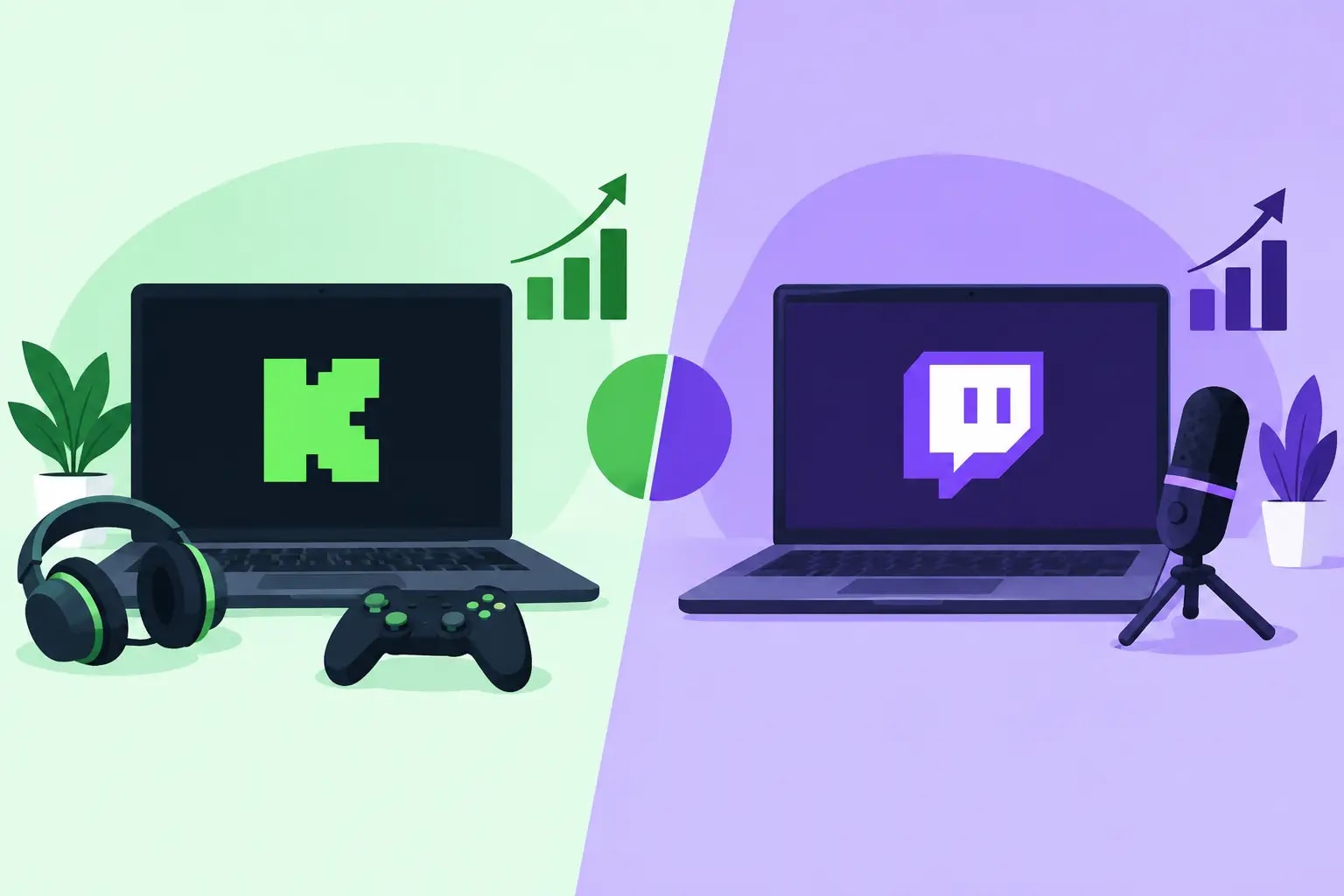
Kick Promotion Versus Twitch Promotion Compared
A stream can be genuinely entertaining and still look invisible when the category is crowded, chat is quiet, and the channel has no obvious momentum. That is the real decision behind Kick promotion versus Twitch promotion: not which platform has a bigger name, but where your content has the clearest path to repeat viewers, active community, and revenue.
Twitch remains the deeper, more mature live-streaming market. Kick is the faster-moving challenger with less category density in many niches. Neither platform automatically grows a channel. Each rewards creators who match their promotion strategy to the way viewers browse, return, and participate.
Kick Promotion Versus Twitch Promotion: The Core Difference
Twitch promotion is usually a competition for attention inside a massive creator ecosystem. Viewers arrive with established habits, favorite channels, and high expectations for production, schedules, and community culture. The upside is scale. A creator who finds product-market fit on Twitch can access a huge audience, strong gaming communities, established monetization tools, and a broad sponsorship market.
The trade-off is competition. In popular categories, a stream with low visible activity can sit far below the channels viewers see first. Promotion on Twitch needs to do more than announce that you are live. It needs to create a reason to click now, then give viewers a reason to come back next week.
Kick promotion often begins with a different advantage: less saturation. A smaller category can make it easier for a newer creator to be noticed, especially in IRL, Just Chatting, sports talk, variety, and emerging game communities. Viewers exploring a less crowded directory may be more willing to try a channel they have never seen before.
That opportunity comes with its own constraint. Kick's total audience and advertiser ecosystem may be smaller for some niches. Less competition does not help if your target viewer is not active there. A creator can rank better in a category yet still reach fewer ideal fans than they would on Twitch.
Where Twitch Promotion Has the Edge
Twitch is built for creators who benefit from an established viewing culture. Gaming audiences already understand raids, subscriptions, channel points, clips, emotes, and live chat rituals. If your growth plan depends on collaborations, tournament coverage, community events, or a specific game with a long Twitch history, the platform gives you more potential connection points.
A smart Twitch promotional system starts before the go-live notification. Short clips should establish your personality and your content premise. A predictable schedule should train viewers when to return. Collaboration should be selective, not random. The right co-stream, raid, or guest appearance puts your channel in front of people who already enjoy your format.
Twitch is also strong for creators who can build a recognizable content loop. For example, a ranked competitive player can turn every live session into clip-worthy moments, post-match analysis, community challenges, and follow-up VOD content. Promotion works because every piece reinforces the next stream.
The hard truth: Twitch viewers have endless choices. A generic title, a silent first 10 minutes, and no clear premise make it easy to leave. Your channel needs a visible promise. Tell people whether they are arriving for high-level gameplay, sharp commentary, chaotic variety, relaxed late-night conversation, or a specific community event.
What to measure on Twitch
Do not judge Twitch promotion only by follower count. Watch average concurrent viewers, chatters per stream, returning viewers, clip performance, and how often viewers convert from one broadcast into repeat attendance. A channel with fewer followers and a lively, consistent audience is in a stronger position than one with a large but inactive follower base.
Where Kick Promotion Has the Edge
Kick can be a serious growth option for creators who want room to establish a presence early. Newer viewers on a growing platform are still testing personalities, communities, and formats. That gives decisive creators an opening to claim a niche rather than fight only for the bottom of an established directory.
The best Kick promotion tends to be direct and community-led. Give viewers a clear reason to participate: recurring segments, live debates, viewer games, reaction formats, watch parties where permitted, or scheduled challenges. A stream that feels active encourages the next visitor to stay long enough to understand the vibe.
Kick can also work well for creators who already have an audience somewhere else. If you have followers on short-form video, Discord, YouTube, X, or another social channel, an early Kick move can turn that outside attention into a core live community. The goal is not to blast every follower with the same message. It is to explain why the live experience is worth showing up for.
Creators should still avoid treating lower competition as a shortcut. A less crowded category is useful only when the stream delivers. Viewers may click because you are visible, but they stay because the host is present, chat has a purpose, and the broadcast moves at a pace that fits the category.
What to measure on Kick
Track your live concurrency, returning chat participants, follows per stream, average watch time, clips that generate new viewers, and the categories that produce your strongest sessions. Also compare weekday and weekend performance. On a platform with shifting audience habits, timing can make a larger difference than creators expect.
Promotion Tactics That Work on Both Platforms
The platform changes, but the fundamentals do not. Real growth comes from giving viewers a compelling first impression and a consistent reason to return. Start with a clear channel identity. “Variety streamer” is not a promise. “Late-night horror games with chat-controlled punishments” is a promise viewers can remember.
Your live title should support that promise. Specific titles outperform vague ones because they help the right viewer self-select. Instead of “We live,” frame the moment: a ranked milestone attempt, a community tournament final, a first-time playthrough, or a challenge with a visible consequence.
Chat deserves operational attention as well. Greet new participants, ask questions that are easy to answer, and build recurring bits that regulars recognize. A busy chat is not merely cosmetic. It gives visitors proof that the channel has a community worth joining. But that activity must be genuine. Purchased followers, artificial viewers, automated chat, and other deceptive engagement tactics can damage trust and may violate platform rules. Short-term numbers are not worth losing a real audience or risking the channel you are building.
Use clips with intent. The best clip is not always the loudest moment. It is the one that communicates your personality within seconds and makes a new viewer think, “I want to see the next live stream.” Cut around the payoff, add enough context to understand the moment, and use the clip to reinforce your channel's central format.
Finally, build a schedule you can actually maintain. Three dependable broadcasts beat seven inconsistent ones. Consistency gives your community a habit, and habits are where sustainable live growth starts.
Which Platform Should You Promote First?
Choose Twitch first if your audience centers on established gaming communities, you want access to a larger live ecosystem, or your content benefits from existing creator networks. Be prepared to compete harder for clicks and to develop a more disciplined promotion engine.
Choose Kick first if you see a genuine opening in your category, you can bring traffic from existing social channels, or you want to build early momentum in a less saturated environment. Be prepared to test formats, study your audience closely, and accept that your niche may have a smaller total viewer pool.
Some creators should use both, where platform policies and their workflow allow it. But spreading attention too early can weaken the content itself. One excellent home base with a clear schedule is usually more valuable than two neglected channels.
The better platform is the one where your ideal viewer can find you, understand your format quickly, and feel enough momentum to return. Pick that lane, show up with a repeatable concept, and make every stream worth talking about after it ends.