Organic Versus Paid Promotion for Streamers
A stream can be entertaining, consistent, and technically polished yet still open to a quiet chat. That is the hard reality behind organic versus paid promotion for Twitch and Kick creators: great content does not automatically create distribution. The right growth strategy puts your channel in front of more of the right people while giving them a reason to stay.
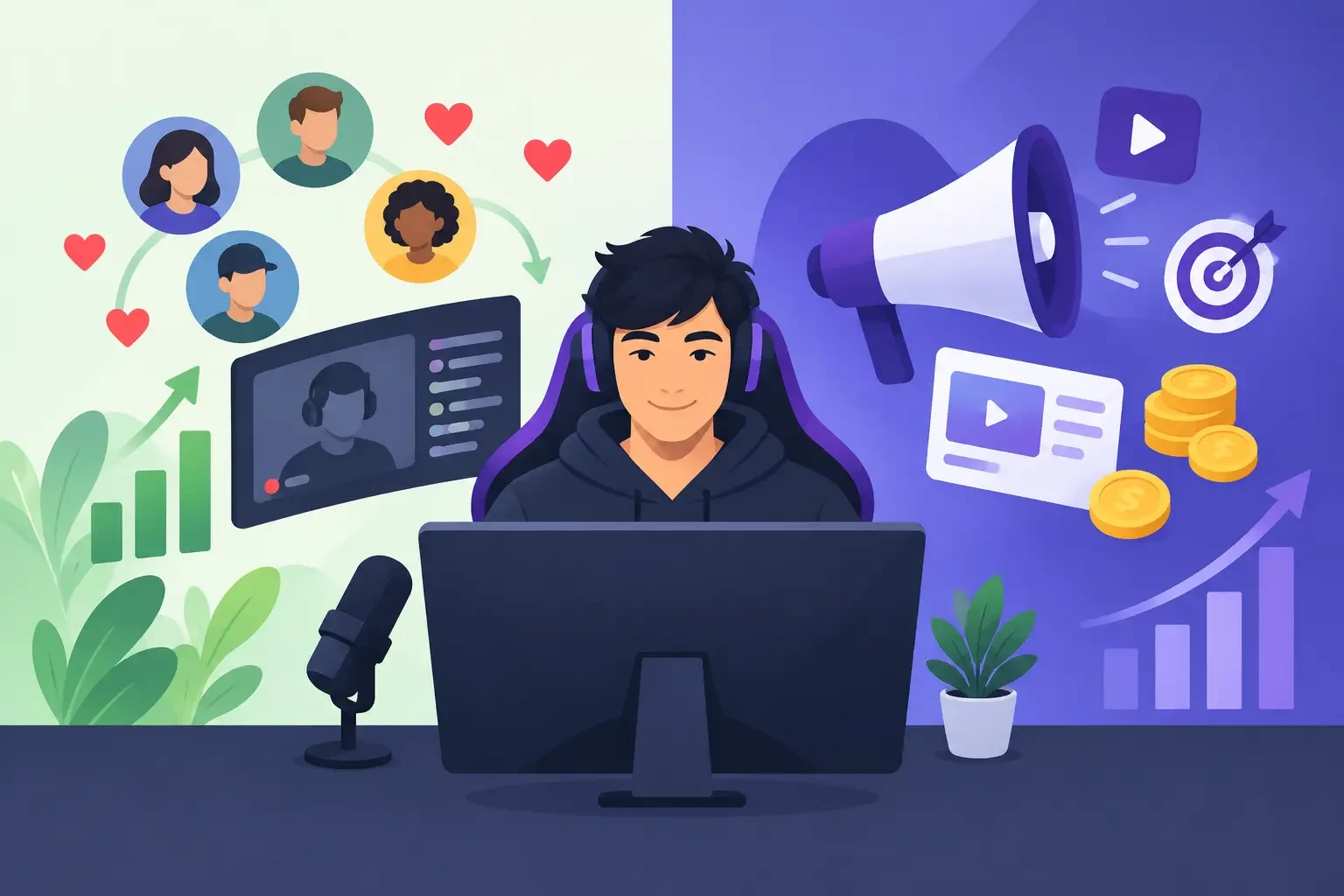
Organic growth builds trust and community over time. Paid promotion can create faster reach, test what converts, and give a strong stream schedule the attention it deserves. Neither route wins on its own. The creators who move fastest know what each one is designed to do, what it costs, and where it can waste money.
Organic Versus Paid Promotion: The Real Difference
Organic promotion is attention you earn without paying directly for each impression or click. For streamers, that usually comes from clips, searchable videos, community referrals, social posts, Discord activity, collaborations, and repeat viewers who make your channel part of their routine.
Paid promotion is attention you purchase through legitimate advertising placements, sponsored content, creator partnerships, newsletter placements, or other paid distribution. You set a budget, choose an audience, and measure whether that spend creates useful outcomes such as profile visits, stream notifications, follows, or returning viewers.
The difference is not simply free versus expensive. Organic promotion costs time, consistency, creative effort, and patience. Paid promotion costs money and requires disciplined targeting. If your stream does not give new viewers a clear reason to watch, paid reach only makes that weakness more visible.
What Organic Growth Does Better
Organic growth is the best foundation for a channel that wants a real identity. A viewer who finds a clip, likes your personality, and returns for three more streams is far more valuable than someone who clicked an ad, watched for ten seconds, and disappeared.
It also teaches you what your audience actually responds to. Maybe your best clips are fast reactions from ranked matches. Maybe viewers show up for late-night Just Chatting takes, challenge runs, or a recurring community game. Organic performance gives you signals that are usually more honest than broad awareness metrics.
For most streamers, the strongest organic system is not complicated. Stream on a predictable schedule, create short-form clips from every broadcast, publish the strongest moments where your target viewers already scroll, and make each piece of content point toward a specific live experience. “I stream games” is not a reason to click. “Every Friday, chat controls my loadout until I win” is.
Consistency matters because viewers need repeated exposure before they remember your name. One excellent clip can produce a spike. A recognizable format can build a channel.
The limits of going fully organic
Organic-only growth is slow when you are starting from low visibility. Twitch and Kick have crowded categories, and a strong stream can sit below hundreds of channels before new viewers ever see it. You may also spend weeks producing content before finding a format that travels.
That does not mean organic is broken. It means you need realistic expectations. Organic works best when you can commit to repetition, learn from performance, and keep improving your hooks. It is a compounding strategy, not an instant switch.
When Paid Promotion Makes Sense
Paid promotion works when you already know what you want viewers to discover. It is especially useful for a scheduled event, a new content series, a tournament appearance, a collaboration, or a channel relaunch with a sharper concept.
For example, a variety streamer may run paid short-form promotion before a charity marathon. A competitive player might promote a high-rank coaching stream to viewers interested in that game. An IRL creator could support a recurring street-interview series with targeted video ads. In each case, the promotion has a clear promise and a clear next action.
The goal is not to buy a vanity number. The goal is to accelerate qualified discovery. You want people who are likely to recognize the content, join live, follow because they want more, and return when you go live again.
Paid promotion is also useful as a testing tool. Run small campaigns with different clips, openings, audiences, and calls to action. If one angle produces significantly more profile visits or follows, that is valuable feedback for your organic content too.
What paid promotion cannot fix
No ad campaign can compensate for a confusing channel page, inconsistent schedule, poor audio, or a stream with no structure. New viewers decide quickly whether they understand what is happening and whether they feel welcome joining chat.
Before spending, check the basics. Your profile should say what you stream and when. Your titles should create a reason to click. Your stream should have clear audio, visible goals, and moments where a newcomer can participate without feeling like an outsider.
Paid traffic also should not rely on misleading tactics or artificial engagement. Short-term optics are not the same as sustainable audience building, and platform rules matter. Invest in promotion that gives real people a real reason to discover your work.
Build a Promotion Mix That Fits Your Stage
The best balance depends on where your channel is now. A brand-new creator should spend most of the effort on building an organic content engine: reliable broadcasts, clips, a clear niche, and community touchpoints. Small paid tests can help, but they should not become the whole strategy.
A creator with consistent streams and proven clips can allocate more budget to promotion. At that stage, paid distribution can extend the reach of content that already performs. Instead of guessing what people want, you are putting fuel behind evidence.
Established creators can use both channels aggressively around launches, sponsor campaigns, major collaborations, and tentpole events. Their organic audience supplies credibility and energy. Their paid campaigns extend the event beyond existing followers.
A simple way to think about budget is this: do not pay to promote every stream. Pay to promote your best opportunity. That could be a major guest, a high-stakes challenge, a seasonal event, or a clip that already earned strong completion and share rates.
Measure Quality, Not Just Reach
Big numbers feel good, but reach is only the first metric. A campaign that delivers thousands of views but no profile visits, no follows, and no live viewers is not necessarily helping your channel.
Track the path from exposure to action. Look at video watch time, click-through rate, profile visits, new follows, live notification signups, chat participation, average watch time, and the percentage of new viewers who return within the next few streams. You do not need a complicated analytics department. You need a simple record of what you spent, what you promoted, and what happened afterward.
Organic content deserves the same scrutiny. If a clip gets views but sends no one to your channel, try a stronger on-screen identity, a better final frame, or a clearer reason to catch the next stream. If a collaboration brings viewers but they never return, consider whether the audiences actually overlap.
Make the First Visit Count
Promotion earns the click. Your broadcast earns the return.
Start streams with purpose instead of waiting silently for people to arrive. Put the challenge, topic, or goal in the title and reinforce it early. Greet new chatters quickly. Create recurring segments that make viewers feel they missed something if they skip the next broadcast. The best growth systems turn attention into participation.
There is no universal split between organic and paid promotion. If your content is still finding its voice, lean organic and learn fast. If you have a proven format and a moment worth amplifying, use paid reach with precision. Keep the channel experience strong, keep your metrics honest, and give every new viewer a reason to come back when the live sign goes on.