

Buy Twitch Viewers? What It Can Cost Your Channel
A quiet stream can feel brutal when you know your content is good. You see channels with fast-moving chat, high viewer counts, and sponsorships, while your own stream is stuck at five viewers. That pressure is exactly why many creators consider whether to buy Twitch viewers. But visible numbers only help when they lead to real attention, real retention, and a channel people want to return to.
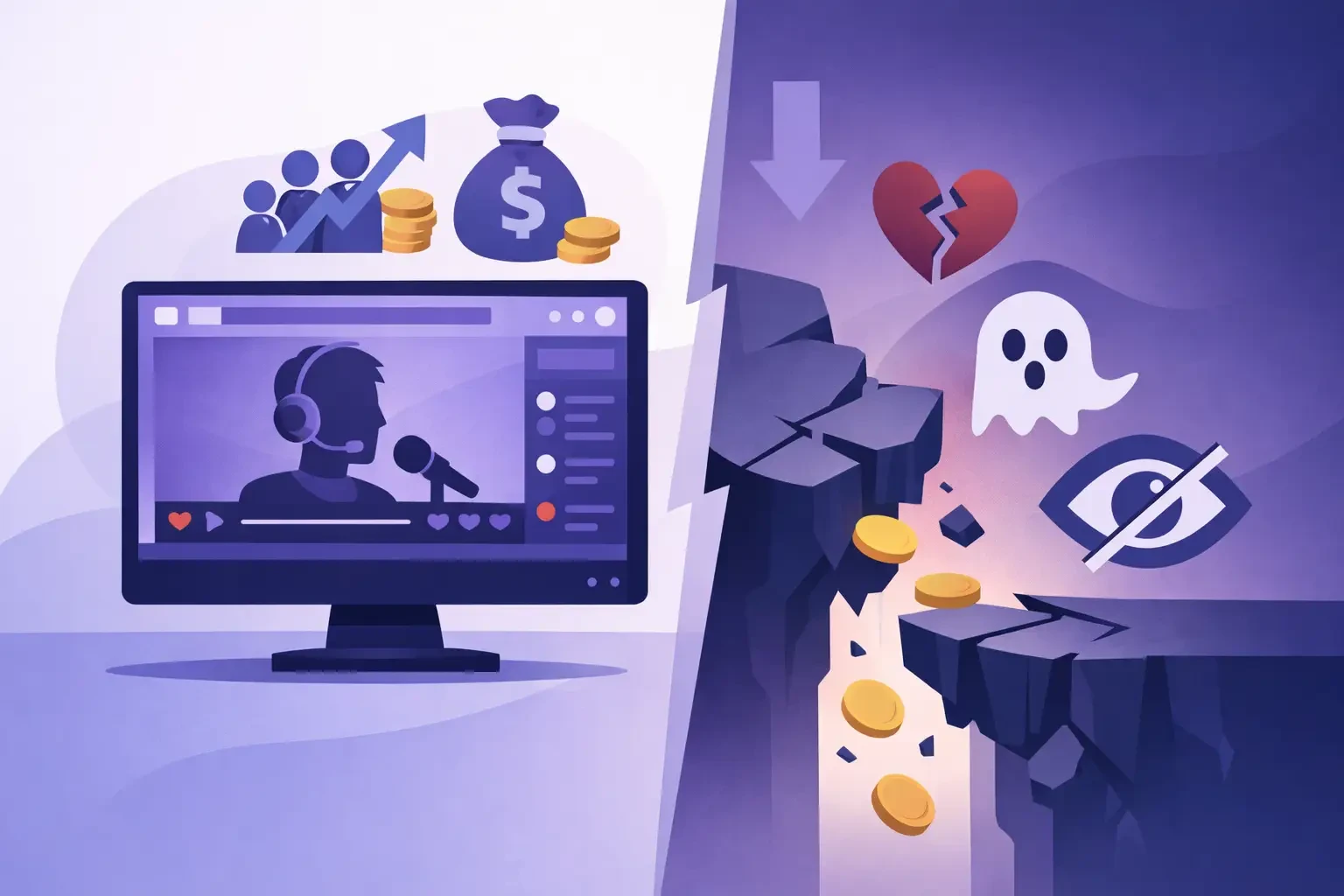
Artificial traffic may create a short-term appearance of momentum, but it can also create problems that are harder to fix than a slow start. If your goal is Affiliate or Partner progress, stronger sponsor conversations, and a community that actually shows up, your growth strategy needs to survive scrutiny.
What Happens When You Buy Twitch Viewers?
Purchased viewers are often promoted as a fast route to higher browse placement and social proof. The pitch is simple: a bigger viewer count makes a stream look more active, which could encourage real people to click. In practice, that outcome is far from guaranteed.
Twitch evaluates far more than a visible concurrent viewer number. Viewer behavior, watch time, chat participation, click-through performance, follows, returning viewers, and other engagement signals all shape the quality of a channel's audience. A high number with no meaningful interaction can make your stream look less convincing, not more.
There is also a platform-risk question. Twitch can change its enforcement methods, traffic-quality standards, and eligibility requirements at any time. Activity that violates platform rules can lead to removed metrics, denied monetization progress, suspension, or account action. No service can honestly promise permanent protection from a platform's own decisions.
The bigger issue is strategic. If your dashboard says 100 viewers but only two people respond when you ask a question, you have not solved the problem that matters: turning a broadcast into a place where people participate.
Why Purchased Viewers Can Hurt Real Growth
A creator's best metric is not the biggest number on screen. It is the number that holds when the stream starts, grows as the show gets better, and returns next week because the audience had a good time.
Empty engagement creates a trust gap
Viewers notice patterns quickly. A stream with a large count and a silent chat can feel strange. The same goes for a channel with sudden spikes in viewership but no matching clips, follows, comments, or returning names in chat.
That trust gap matters most when you are trying to turn casual viewers into regulars. Real people may hesitate to join a conversation that appears inactive, even if the stream count is high. Creators can end up paying for an image that makes community-building harder.
Sponsorships look beyond headline numbers
Brands, agencies, and potential partners increasingly ask better questions. They may look at average watch time, audience geography, chat activity, conversion performance, social engagement, and the consistency of your growth. A big concurrent-viewer number is useful only when the rest of the channel supports it.
If your audience data does not align, a sponsorship conversation can stall. Worse, it can damage your reputation with people you may want to work with again.
Bad data leads to bad decisions
Streaming is already competitive. You need reliable feedback to know which game, title, format, thumbnail, opening segment, and stream schedule are working. Artificial traffic muddies that feedback.
You may think a category is performing because the count is higher, when the real audience response is flat. You may miss the actual reason viewers leave during the first 15 minutes. Clean data is not glamorous, but it helps you improve faster than inflated data ever will.
Build Twitch Viewers Through Momentum That Lasts
Growth is not always fast, but it can become repeatable. Focus on creating clear reasons to click, stay, talk, and come back. That is how a small stream stops feeling small.
Start with your first 10 minutes. Do not open with a long silent warm-up, menu screen, or “starting soon” period that runs forever. Give viewers an immediate reason to stay: a ranked challenge, a hot take, a viewer-voted choice, a speedrun attempt, a story with a payoff, or a clear stream goal displayed on screen.
Your title should also make a promise. “Playing Valorant” gives a viewer almost nothing to choose. “Road to Immortal - Reviewing Every Bad Play Live” is more specific. It tells people what kind of experience they will get and gives them a reason to enter the chat.
Use clips as discovery assets, not as random leftovers. A strong clip has context in the first second, a clear reaction or payoff, and captions that make sense even when someone does not know you. Post the best moments where your potential audience already spends time, then make the live stream the next logical step.
A practical weekly growth system can include these five actions:
- Review your last three broadcasts and identify where real viewers joined or left.
- Turn one high-energy moment from every stream into a short, understandable clip.
- Schedule streams around a consistent format, not just a consistent time.
- Give chat a recurring role, such as choosing challenges, builds, punishments, or topics.
- Collaborate with creators who share your audience size and content style.
Consistency does not mean repeating the same stream without thinking. It means giving viewers a familiar reason to return while testing one meaningful improvement at a time. Maybe this week you improve your opening. Next week you add a better chat prompt. The following week, you test a new category or content series.
Paid Growth That Does Not Fake Your Audience
Spending money on your channel can be smart when it improves the product or reaches people who may genuinely care. The difference is whether the investment creates real opportunities for real viewers to choose you.
Consider paying for better audio, cleaner lighting, a more readable overlay, editing support, thumbnail design, or a short-form content workflow. These upgrades can raise retention because they improve the experience after someone clicks.
Targeted promotion can also make sense when it is transparent and points toward content that matches the audience you are reaching. A creator who streams horror games, for example, should promote a compelling horror-game moment to viewers who already enjoy that space, not chase random impressions that never become watch time.
Community events are another better use of budget. A tournament entry, collaborative challenge, themed stream night, or creator giveaway can give real people something to discuss and share. Keep rules clear, follow platform policies, and make the event enjoyable even for viewers who do not win anything.
When Your Stream Looks Empty, Fix the Room
The early phase of streaming is uncomfortable because you have to create energy before the room is full. Treat every broadcast like it could be the first time someone discovers you. Narrate your decisions, ask specific questions, respond quickly when someone speaks, and avoid acting defeated by the count.
A creator with four engaged people can build more long-term value than a channel displaying 100 viewers with no community behind it. Those first regulars become your conversation starters, clip sharers, moderators, collaborators, and best source of honest feedback.
The goal is not to look popular for one stream. Build a channel that gives the next real viewer a reason to stay, talk, and bring someone back with them.